


Wellness Ritual
After a long day on your feet, few things feel as good as a warm Epsom salt soak. It’s simple, inexpensive, and genuinely restorative.
Epsom salt (magnesium sulphate) dissolves into warm water to soothe tired muscles, soften skin and help you unwind. No fancy spa needed, just a basin and ten quiet minutes.
Benefits of an Epsom foot soak
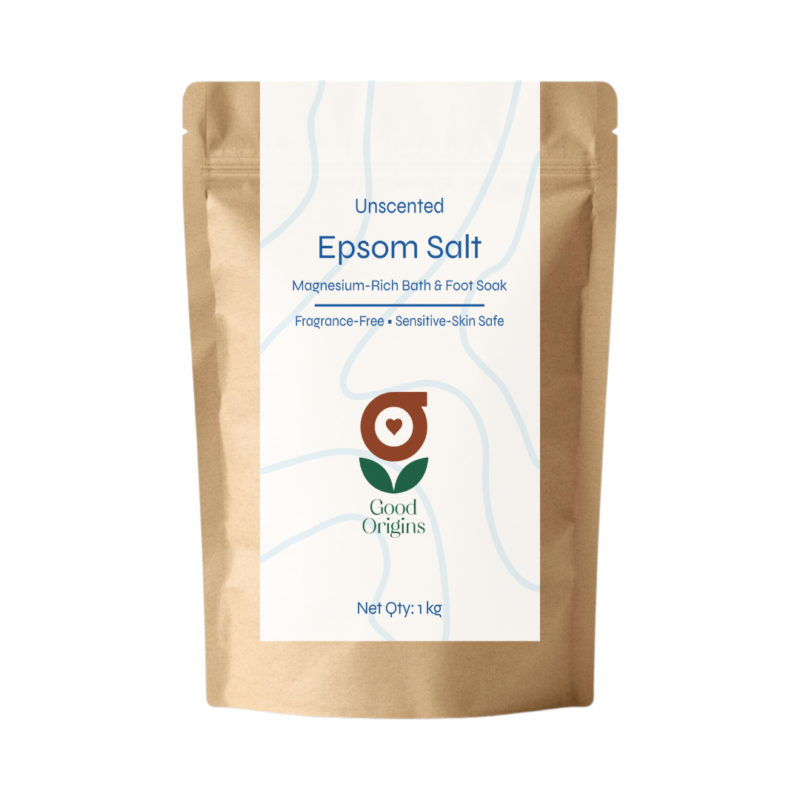
- Relaxes tired, achy feet and calves after long hours standing or walking.
- Softens rough skin and helps with cracked heels.
- Soothes the senses — a warm soak is a proven wind-down ritual for better sleep.
- Freshens feet — helpful after sweaty, closed-shoe days.
How to do it
Warm water, not hot
Fill a basin with comfortably warm water, enough to cover your ankles.
Add Epsom salt
Stir in 2 tablespoons (or a handful) and let it dissolve.
Soak 15–20 minutes
Sit back, breathe, and let your feet relax. Add a lavender blend to unwind further.
Pat dry & moisturise
Dry well and apply a nourishing oil or balm to lock in softness.
Does magnesium absorb through the skin?
The evidence for meaningful absorption is weak. Soak because it feels good and softens skin, not for a mineral effect.
How long should I soak?
Twenty minutes. Longer waterlogs the skin and makes it more fragile.
Can I reuse the water?
No. Fresh each time, particularly if anyone in the house has a fungal infection.
Is it safe in pregnancy?
A warm foot soak is generally fine and often welcome for swollen ankles. Keep the water warm rather than hot.
What a foot soak does, honestly
Warm water does most of the work here, and that is worth saying plainly. Heat increases local blood flow, softens hardened skin and relaxes the small muscles of the foot. Epsom salt makes the water feel silkier and softens skin further.
The common claim that magnesium is absorbed through the skin in useful amounts is not well supported. Reviews of transdermal magnesium have been sceptical, and the honest position is that a foot soak feels excellent and helps tired feet and rough heels, without needing a mineral absorption story to justify it.
The method
Warm, not hot
Comfortably warm to the wrist. Hot water dries skin and is unsafe if you have reduced sensation.
Half a cup, dissolved
Stir until it dissolves. Undissolved crystals scratch rather than soften.
Twenty minutes
Longer waterlogs the skin and makes it more fragile, not softer.
Dry between the toes
The step everyone skips. Damp skin between toes is where fungal infections start.
Two mistakes
Frequently asked questions
How much Epsom salt for a foot soak?
About 2 tablespoons (a small handful) per basin of warm water is plenty. There’s no need to overdo it.
How often should I do an Epsom foot soak?
2–3 times a week is a lovely rhythm, or any time your feet feel tired and achy.
Can I add essential oils?
Yes, a lavender or eucalyptus blend adds aromatherapy benefits. Our scented bath salts have these blended in already.
