
Bath salts have quietly become an everyday self-care staple in India – and you don’t need a fancy bathtub to enjoy them. Here’s how to pick the right one for you.
Why use a bath salt?

A good bath salt turns a regular bath into a 15-minute reset – easing sore muscles, softening skin and helping you switch off. The key is choosing one made with real minerals and botanicals, not synthetic fragrance.
The main types of bath salt
- Epsom salt (magnesium sulphate): the all-rounder – best for sore muscles and relaxation.
- Himalayan pink salt: mineral-rich, gentle, great for softening skin.
- Himalayan black salt: traditionally used for its detoxifying reputation.
- Dead Sea salt: rich in minerals, but usually imported and pricier.
The best blends combine a few of these – ours pair Epsom and Himalayan salts with real dried botanicals.
Pick your scent by mood
- To relax and sleep -> Lavender. Calming and soft. “Love the natural ingredients – no artificial fragrances, just pure botanical goodness” – Nikita A.
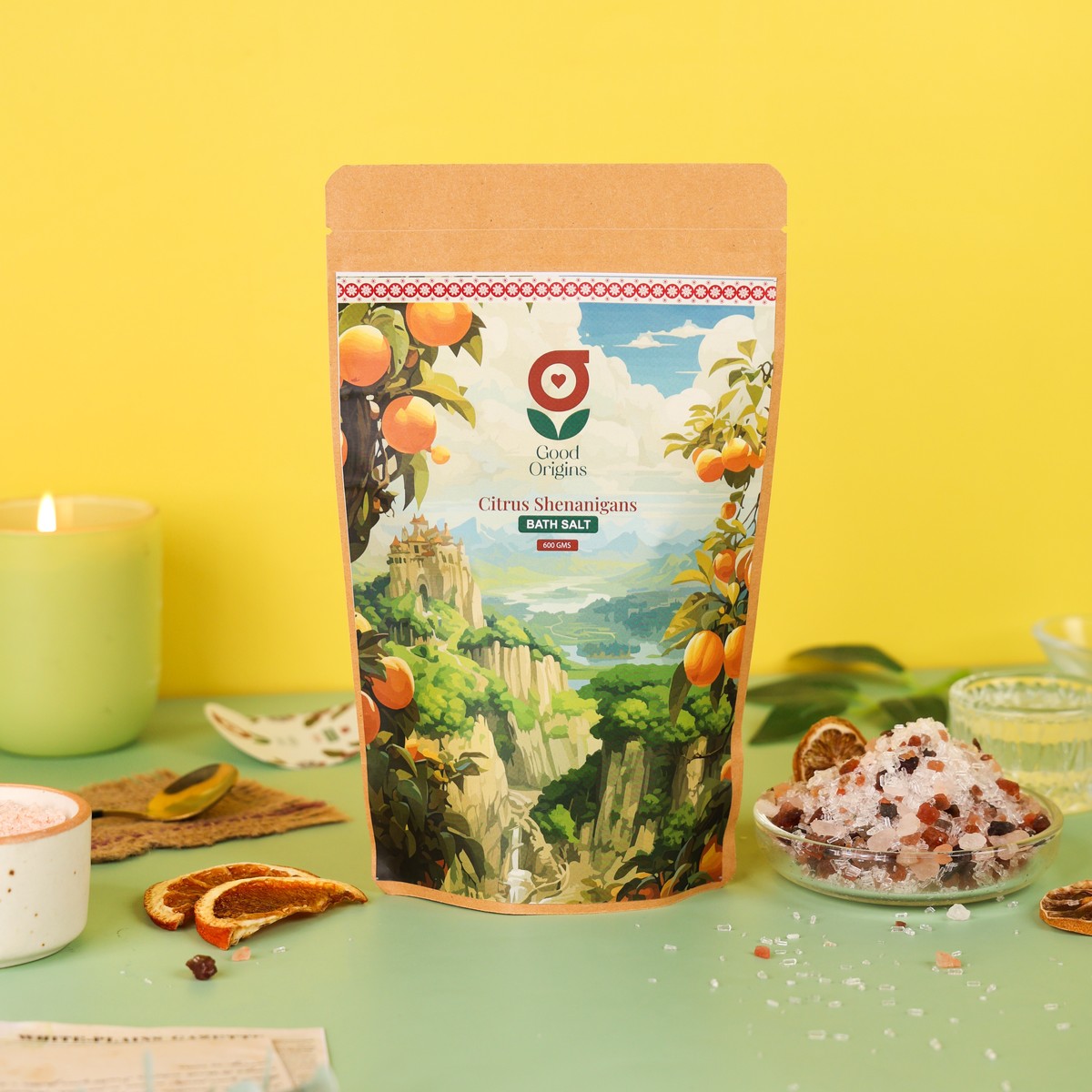
- To energise -> Citrus (orange and lemon). A bright morning pick-me-up.
- To detox after the gym -> Neem and Tulsi Herbal. “Helps SO much with muscle soreness” – Arun V.
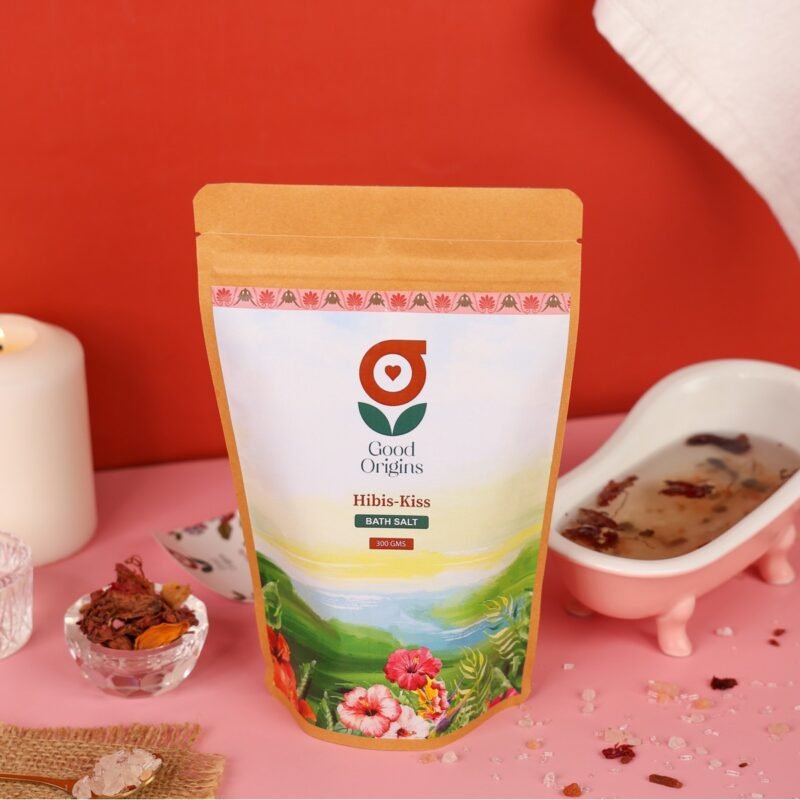
- For glowing, soft skin -> Hibiscus. A floral soak that softens skin.
What to look for (and avoid)
Look for real Epsom/Himalayan salt, natural essential oils and dried botanicals, and no synthetic fragrance or colours. Avoid cheap salts loaded with artificial perfume – they can irritate skin.
How to use (no bathtub needed)
Bucket bath or foot soak both work beautifully – add a scoop to warm water and soak 15-20 minutes. “Makes my bucket bath feel luxurious – don’t need a bathtub!” – Deepa G.
FAQ
Which bath salt is best for stress? Lavender, for the calming scent.
Best for cracked heels or tired feet? Any Epsom-based salt as a foot soak.
Do I need a bathtub? No – bucket bath or foot soak is perfect.
Explore Good Origins bath salts – Lavender (sleep), Citrus (energy) and Hibiscus (glow) – all Epsom-based, all clean.
What separates a real bath salt from coloured salt
Most of what sells as bath salt in India is coarse salt with fragrance and colour added. It smells nice and does very little. Three checks tell you which you are holding.
- What the base salt actually is. Magnesium sulphate is Epsom. Sodium chloride is table or sea salt. They are different things and only one is what people mean by Epsom salt.
- Whether the botanicals are real. Actual dried petals and herbs look uneven and fade over time. Uniformly bright colour is dye.
- Fragrance or essential oil. Both are legitimate, but a product should say which. Fragrance is cheaper and stronger, essential oil is subtler and fades.
Choosing by what you actually want
Sore muscles after exercise. Plain Epsom, no botanicals, larger quantity. You are there for the warm water and the magnesium sulphate, not the scent.
Winding down before sleep. Lavender, warm rather than hot water, and get out before you are fully relaxed rather than after.
Dry or itchy skin. Go easy. Salt can be drying in quantity. Half the amount, twenty minutes, and moisturise immediately on damp skin.
A foot soak. Half a cup in a basin is plenty. A full bath quantity in a basin is wasteful and too concentrated.
Epsom salt or sea salt?
Different things. Epsom is magnesium sulphate and is what most bath advice refers to. Sea salt is sodium chloride and is more about texture and scent.
How much should I use?
One to two cups in a full bath, half a cup in a foot basin. More is not better and can be drying.
Will it help me sleep?
A warm bath before bed genuinely helps sleep onset, largely through the drop in core temperature afterwards. That effect is real regardless of what you put in the water.
Can I use it every day?
Two or three times a week is kinder to your skin. Daily salt soaking tends to dry it out.