

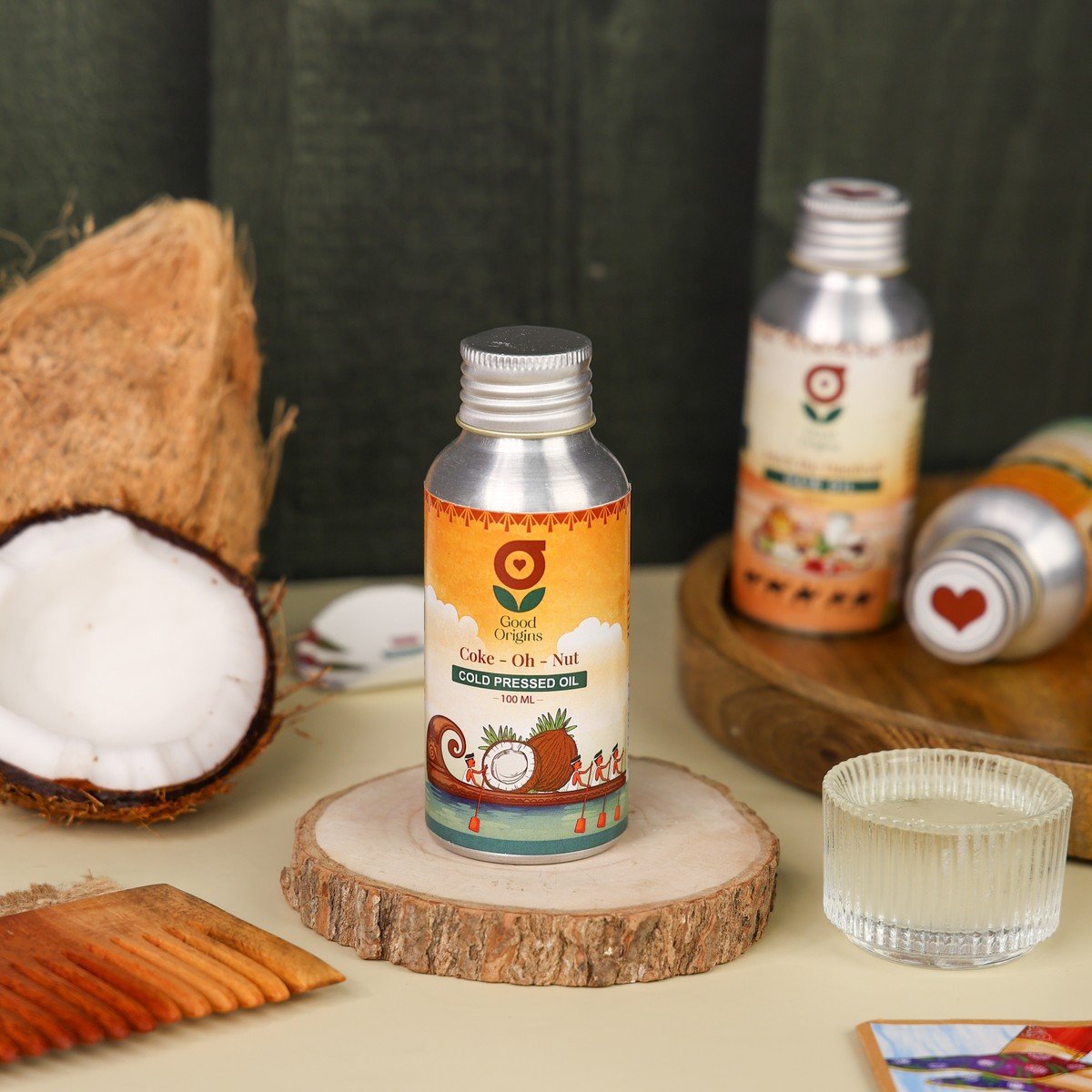
Ingredient Deep-Dive
Coconut oil is India’s original hair secret, and one of the very few oils scientifically shown to actually penetrate the hair shaft, not just coat it.
The catch: not all coconut oil is equal, and how you use it makes all the difference. Here’s how to get real results.
Why coconut oil works
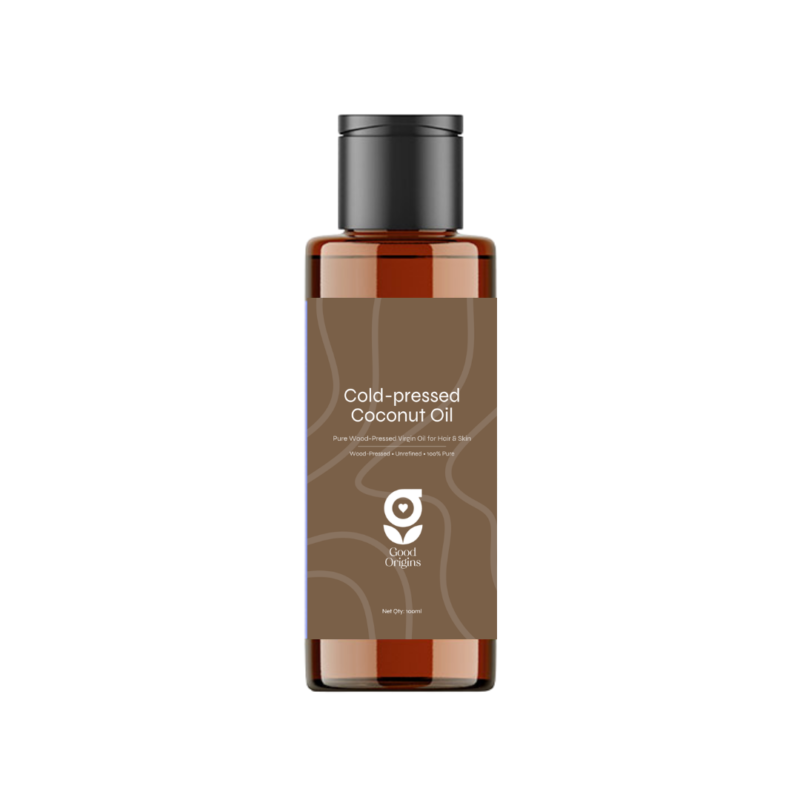
- Penetrates the hair shaft — its lauric acid reduces protein loss, unlike most oils that only sit on top.
- Reduces breakage — stronger strands mean less mid-length snapping.
- Fights scalp dryness & flakes with mild antimicrobial action.
- Adds softness and shine without silicones.
The right way to use it
Use it as a pre-wash
Apply 15–30 minutes before washing, this is when coconut oil best reduces protein loss and breakage.
Warm a small amount
Gently warm the oil and massage into scalp and lengths. A little goes a long way.
Leave, then wash
Leave 30 minutes (or overnight for deep conditioning), then cleanse with a gentle wash.
Choose cold-pressed
Cold-pressed / wood-pressed oil keeps nutrients intact, refined oil loses most of them.
Before or after washing?
Before, about an hour ahead. That is when it does its actual job of limiting protein loss during the wash.
Does coconut oil grow hair?
No. It protects the hair you have from breakage, which means you keep more length. That is not the same as new growth.
Can I use it if I have dandruff?
On the length yes, on the scalp no. The yeast behind most dandruff feeds on it.
Virgin or refined?
Cold pressed virgin keeps more of the minor compounds and smells better. For the protein effect, both work.
Why coconut oil is different from most hair oils
Most oils sit on the outside of the hair shaft. Coconut oil is one of the few that genuinely penetrates it, because lauric acid has a straight structure and a low molecular weight that lets it pass through the cuticle.
That matters for one specific thing: protein loss. Hair swells when wet and loses protein each time. A frequently cited study comparing mineral, sunflower and coconut oil found coconut oil reduced that loss where the others did not. Applied before washing, it limits the damage the wash itself causes.
So the useful framing is protective rather than restorative. It does not repair damage already done, and it is not a growth treatment.
Who it does not suit
Coconut oil is not universally good, and pretending otherwise is why some people have a bad time with it.
- Flaky or itchy scalps. Malassezia feeds on it. If you have dandruff, keep coconut oil off the scalp and use it on the length only.
- Very fine hair. It can weigh hair down and read as greasy. Use half what you think and only on the ends.
- Low porosity hair. If water beads on your hair rather than soaking in, coconut oil often sits on top and never absorbs.
Three mistakes
Frequently asked questions
Should I leave coconut oil overnight?
You can for a deep condition, but even a 30-minute pre-wash gives most of the protein-protection benefit. Overnight is optional.
Is cold-pressed coconut oil better?
Yes, cold/wood-pressed oil retains more nutrients and aroma than heat-refined oil, which is processed at high temperatures.
Can coconut oil grow hair?
It doesn’t directly grow hair, but by reducing breakage and keeping the scalp healthy it helps you retain length and see fuller hair.
