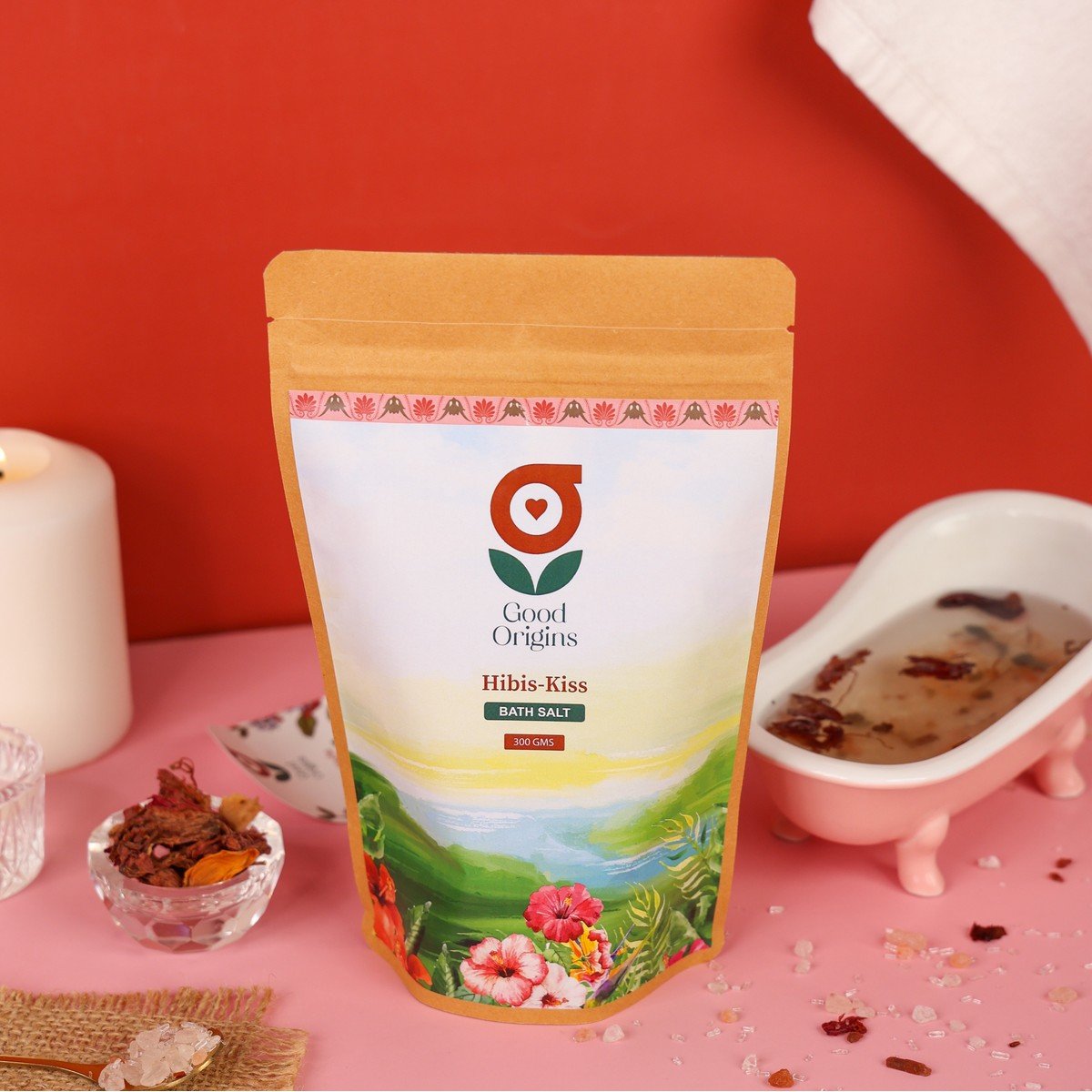
Hibiscus in a bath is not a treatment and should not be sold as one. What it reliably does is soften water, scent it without synthetic fragrance, and leave skin smoother than plain salt does. That is worth having, and this is how to get it right.
What hibiscus actually brings to the water
Two things. Mild fruit acids, which is why hibiscus turns up in so many traditional hair and skin preparations, and anthocyanins, the pigments that give the petals their colour and carry antioxidant activity.
In bath concentrations both are gentle. Nobody should expect an active effect from a twenty minute soak, and any brand claiming one is stretching. The honest benefit is sensory and physical: softer water, softer skin, and a scent that comes from a plant rather than a fragrance oil.
Epsom, Himalayan or sea salt, and why it matters
The base salt does more than the botanicals, and most people never check which one they are buying.
- Epsom is magnesium sulphate. This is what people mean when they say bath salt for sore muscles.
- Himalayan pink is sodium chloride with trace minerals. Mostly texture and colour.
- Sea salt is sodium chloride. Fine, but not what the muscle-soak research refers to.
A good hibiscus soak usually blends Epsom for the soak itself with Himalayan for texture, plus real petals. If the packet does not say which salt, assume the cheapest.
1-2cups per full bath
20minutes, warm not hot
2-3xper week
How to tell a real bath salt from coloured salt
1
Look at the petals
Real dried hibiscus is uneven, deep red to purple, and fades over months. Uniform bright colour is dye.
2
Read the salt
Magnesium sulphate should be named. “Bath salt” on its own tells you nothing.
3
Fragrance or essential oil
Both are legitimate, but the label should say which. Fragrance is stronger and cheaper.
4
Smell it dry
Real botanicals smell faint and slightly tea-like. An overwhelming scent from a dry packet is fragrance oil.
Using it properly
Add to running water so it dissolves before you get in. Undissolved crystals scratch. Keep the water comfortably warm rather than hot, because hot water strips skin and undoes the point. Twenty minutes is the sweet spot; longer waterlogs the skin and leaves it more fragile, not softer.
The step that actually decides whether your skin feels good afterwards is moisturising within about three minutes of getting out, on skin that is still damp.
A cheap drain strainer solves the petal problem. That is the practical reason people abandon botanical baths, rather than anything to do with the product.
Who should go easy
Very dry or eczema-prone skin. Salt in quantity is drying. Half the amount, and moisturise immediately.
Pregnancy, low blood pressure or heart conditions. The risk in a long hot bath is overheating rather than the salt. Check with your doctor.
Open cuts or broken skin. Salt water stings on broken skin. Wait until it has healed.
Common questions
What are the benefits of a hibiscus bath?
Softer water, softer skin, and a natural scent. It is a sensory and skin-feel benefit rather than a treatment, and it is worth having on those terms.
Will hibiscus stain the bathtub?
Not at bath concentrations. Rinse afterwards and no colour remains.
How much should I use?
One to two cups in a full bath, half a cup in a foot basin. More is not better and can be drying.
Is it different from Epsom salt?
Epsom is the magnesium sulphate base. Hibiscus adds petals, scent and mild fruit acids. For sore muscles, plain Epsom in larger quantity is the better choice.
Can I use it as a hair rinse?
The salt is not ideal for hair. Use a hibiscus powder or infusion instead.
How often is safe?
Two or three times a week. Daily salt soaking tends to dry skin out.
Read next