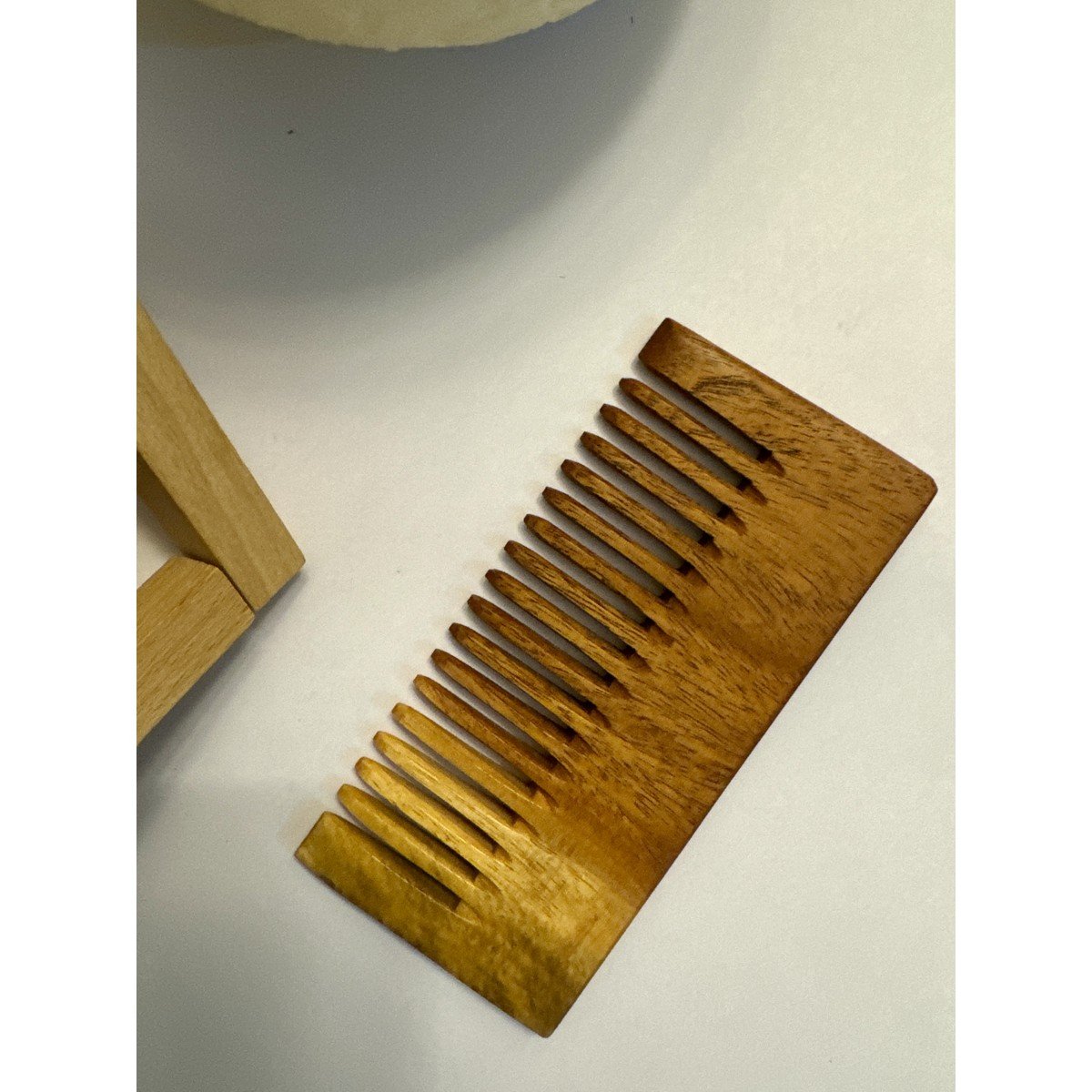
A neem wood comb is one of the few pieces of hair kit where the traditional choice genuinely beats the modern one, and the reason is physics rather than folklore.
Why wood instead of plastic
Plastic combs build static. Dragging plastic through dry hair strips electrons, the strands repel each other, and you get frizz and flyaway. Wood does not hold a charge the same way, so it glides without generating static.
The second difference matters more. Wood has slight give and rounded teeth, so it eases through a tangle rather than snapping it. Most plastic combs are moulded with a seam down each tooth, and that ridge is a small blade running along your hair every time you comb.
Third, a wooden comb distributes sebum. Your scalp produces oil that never reaches the ends on its own. Combing spreads it down the shaft, which is why hair looks conditioned after a proper comb-through and why the practice survives in every traditional hair care system.
0static build-up
2xdaily is plenty
2-3years, if oiled
Why neem specifically
Neem is the traditional wood for combs across India, and not arbitrarily. It is naturally antimicrobial, which matters for something that sits in a damp bathroom touching your scalp daily. It is also hard enough to hold fine teeth without splintering, and it does not warp as readily as softer woods.
The published work on Azadirachta indica documents that antimicrobial activity in some detail. For a comb, the practical effect is that it stays cleaner between washes than plastic does.
Wide tooth or fine tooth
Wide tooth. For detangling, for wet or damp hair, and for curly, thick or long hair. This is the one most people should own. Wet hair is measurably weaker, and a wide tooth comb is the only safe thing to put through it.
Fine tooth. For smoothing, for parting, and for distributing oil on straight or fine hair. It will snap a tangle rather than ease it, so never use it first.
Both in one. The classic dual comb, wide on one side and fine on the other. Detangle with the wide end, finish with the fine.
How to use it without causing breakage
1
Start at the ends
Not the roots. Work upward in sections. Combing from the scalp down drags every tangle into a knot at the ends.
2
Never on soaking hair
Damp is fine with a wide tooth. Soaking wet hair stretches and snaps.
3
Slow through a knot
Hold the hair above the tangle so the pull is on your hand, not your scalp.
4
Comb before oiling
Detangle first, then oil, then a gentle pass to distribute. Combing oiled tangles just spreads the problem.
Caring for it
Wash it monthly with a little shampoo and a soft brush, and dry it flat rather than standing it in water. Once every few months, rub a few drops of coconut or neem oil into the wood. That is what stops it drying out and cracking, and it is why a well kept wooden comb lasts years while a neglected one splits in one.
Never soak it. Wood swells and splits. A quick wash and an immediate dry is all it wants.
Do not leave it in the bathroom. Constant humidity is the fastest way to warp one.
Common questions
Does a neem comb stop hair fall?
Not directly. It reduces breakage and static, which means you lose less hair to mechanical damage. Actual hair fall from the root is a different problem.
Wide tooth or fine tooth?
Wide tooth if you own one comb. It is the only safe option for damp or tangled hair.
Can I use it on wet hair?
Damp yes, with a wide tooth. Soaking wet no, whatever the comb is made of.
How long does a wooden comb last?
Two to three years with occasional oiling. Left wet in a bathroom, under a year.
Does it help with dandruff?
Neem is antimicrobial, but a comb is not a treatment. It will not make flaking worse the way a dirty plastic comb can.
Read next