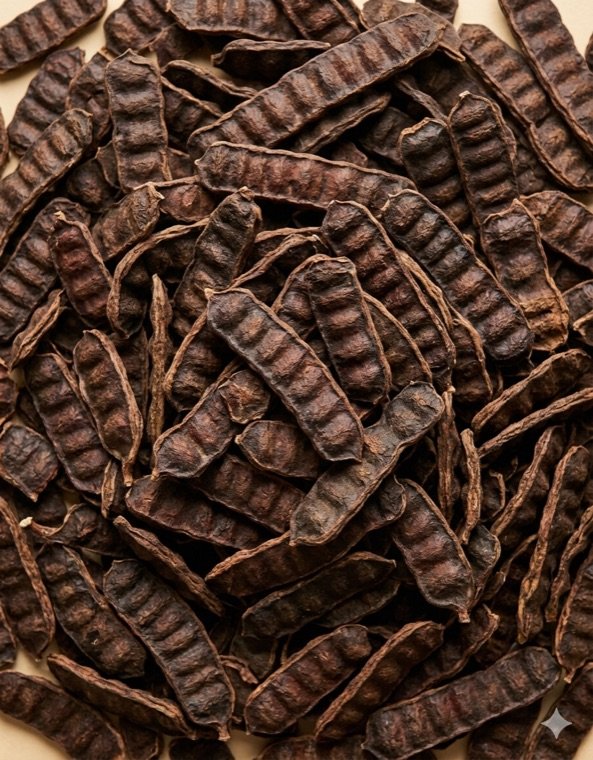
Herbal hair wash powder is what most of India used before shampoo arrived, and it is having a second run for a good reason: it cleans without stripping. This is the honest guide, including the fortnight where it feels like it is not working.
What is actually in a herbal hair wash
A proper hair wash powder is a blend, not a single herb. Each part does a different job.
- Shikakai (Acacia concinna), called seekakai or seeyakai in Tamil. Carries the saponins that do most of the cleaning. Mildly acidic, which is why it does not roughen the cuticle the way an alkaline soap does.
- Reetha or soapnut (Sapindus mukorossi), kunkudukaya in Telugu. More saponin, more lather, more cleaning power. Too much and it gets drying.
- Arappu (Albizia amara), the traditional Tamil hair wash leaf. Gentler than both, and the one older generations in Tamil Nadu will name first.
- Hibiscus, chembaruthi in Tamil. Conditioning rather than cleaning. It is what stops the wash feeling squeaky.
- Fenugreek and amla for slip and shine.
How it cleans without sulphates
Sulphates are detergents. They are extremely good at removing oil, and that is the problem: they remove all of it, including the sebum your scalp produced on purpose. Your scalp responds by making more, which is the cycle behind hair that feels greasy by day two.
Saponins are different. They are plant compounds that lower the surface tension of water enough to lift dirt and excess oil, without the aggression of a synthetic detergent. Less lather, less stripping.
Lather is not cleaning. Foam is a detergent effect we have been trained to read as clean. A herbal wash cleans with almost none, which is the single hardest thing for people to accept when they switch.
3-4washes to adjust
2xper week is typical
8weeks to judge properly
The transition fortnight, and why most people quit
The first two or three washes feel wrong. Less lather, hair feels coated, roots look oilier by day two. This is the point at which most people conclude it does not work and go back.
What is actually happening is that a scalp used to being stripped is still over-producing oil. It takes a few weeks to recalibrate. The adjustment is real, it is temporary, and knowing it is coming is most of what gets people through it.
How to use it properly
1
Soak, do not just stir
Fifteen minutes in warm water lets the saponins release. Stirring powder into cold water skips that entirely.
2
Mix thin, not thick
Thin buttermilk consistency. A thick paste sits in one place and rinses badly. Mix it in a bottle rather than a bowl.
3
Scalp only, two minutes
Fingertips on the scalp. The rinse-off cleans the length on its way down.
4
Rinse far longer than feels needed
Residue is the number one cause of dull hair after a herb wash. Keep going after you think you are done.
What it will not do
It will not cut heavy silicone build-up. If you use a lot of serum or styling product, keep a clarifying wash for occasional use. That is chemistry, not a failing of the herb.
It will not fix hard water. Much of urban India has hard water, which leaves a film whatever you wash with. A filter changes more than switching herbs.
It will not grow hair. A gentle wash protects the hair you have, which genuinely matters for length retention. That is a different claim from growth.
It will not treat a scalp condition. Persistent flaking and itch is usually seborrhoeic dermatitis, and the
AAD guidance is the right place to start.
Who it suits, and who it does not
Good fit: dry or frizzy hair, coloured hair, sensitive scalps, anyone whose hair feels greasy within a day of washing, and anyone who oils regularly.
Poor fit: heavy styling product users, anyone with an untreated scalp condition, and anyone who genuinely cannot get past the low lather. That last one is not a small thing and it is worth being honest with yourself about it.
Common questions
Is herbal hair wash powder better than shampoo?
Gentler, not stronger. It cleans without stripping, which suits most people. If you use heavy styling products, a shampoo still has a place.
Why is there no lather?
Saponins clean without foaming. Lather is a detergent effect, not a measure of cleaning.
My hair feels greasy after switching. Is that normal?
For the first three or four washes, yes. Your scalp is recalibrating. If it persists past six washes, you are probably under-rinsing.
Can I use it on coloured hair?
Yes, and it is gentler on colour than a sulphate shampoo or a clarifying wash.
Do I need conditioner afterwards?
Many people do not. If your ends feel rough, use a light conditioner on the length only.
How often should I wash?
Twice a week suits most people. Daily washing with anything, herb or shampoo, works against you.
Will it block my drain?
Over months, yes. A cheap drain strainer solves it, and it is the practical reason most people give up rather than anything to do with the wash.
Read next